The Cert IV in Training and Assessment is a useful, career-shaping certification. It instructs you exactly how to design knowing, supply engaging sessions, and analyze proficiency against nationwide criteria. It likewise requests real job: preparing assessment tools, running sessions with real or substitute students, accumulating proof, and reflecting on your practice. People that treat the certificate as a tick-box job tend to delay mid-course. The ones that end up, and finish strong, method it like a work task with structure, practical shortcuts, and a clear eye on context.

I have coached lots of prospects with the trip, from first login to the last recognition conference. The pattern is consistent. You do not need to be an academic. You do need to be organised, proof minded, and straightforward concerning your staminas. Below are the methods that operate in the real life for the TAE40122, whether your provider badges it as a cert iv training and assessment, cert 4 training and assessment, or certificate 4 in training and assessment. The codes and names vary by RTO marketing, however the demands of the training and assessment course are similar.
Know the finish line before you start
Before you open a workbook, download the entire collection of evaluation tasks and scan them. Your cert iv tae will likely ask you to do all of the adhering to in some type: translate devices of competency, style knowing programs, create or contextualise analysis devices, provide training, and examine prospects. Many additionally consist of language, proficiency and numeracy assistance preparation, and validation of evaluation devices. Knowing this very early adjustments how you research study. Every analysis, webinar, or method task ends up being a possibility to build one item of your last portfolio.
RTOs style tasks differently. Some desire 3 evaluation tools mapped to one unit. Others ask for a full assessment system throughout a small capability. Some require you to evaluate multiple candidates using your tools. Review the small print around problems, varieties of candidates, and permitted simulations. If you currently monitor team in the work environment, you can typically collect authentic proof quicker. If you are new to training, your supplier may have substitute environments and example sources. Suit your approach to your context from day one.
Set up a simple system that scales
You will certainly produce and handle lots of tiny artefacts in the certificate iv training and assessment. Without a neat framework, you shed time searching for the appropriate draft. I advise one origin folder each or collection, and within it, subfolders for readings, drafts, final devices, mapping, and proof. Use simple names with dates and variation numbers, for instance "AssessmentTool PracticalTaskv2 _ 2026-05-10. docx." Keep emails or messages from your trainer that validate decisions, simulations, or sensible modifications. Those entered into your audit trail.
If your RTO offers design templates, use them as opposed to reinventing the wheel. Quality fitness instructors acknowledge pupil time is priceless. Templates for session strategies, mapping matrices, and assessor guides lower cognitive tons so you can concentrate on material. If your provider does not offer a mapping matrix, build an easy one in a spread sheet: device components down the rows, efficiency criteria and evaluation requirements throughout columns, and a recommendation to where each is dealt with in your tool or monitoring checklist. This practice does greater than please assessors. It teaches you design discipline.
Think like a VET professional, not a student
The TAE is a professional qualification. It is not testing your ability to write essays. It is examining your capacity to develop and utilize devices that satisfy the criteria. Anchor your work in the four concepts of analysis and the 4 regulations of proof. Claim aloud just how your design and execution satisfy them.
- Principles of evaluation: justness, adaptability, legitimacy, reliability. Rules of evidence: credibility, adequacy, authenticity, currency.
When you select an approach, inspect it versus the concepts. A useful observation could be the most legitimate way to evaluate a job, however if your candidates are in remote locations, can you still attain integrity via video clip evidence and a detailed list. When accumulating Office Evidence Reports or 3rd party attestations, check the regulations. Does the manager have standing to sign? Is the evidence current adequate to be existing? Might the artefact be somebody else's work, and if so, how will you confirm authenticity?
Being explicit regarding these judgments, also in brief assessor notes, raises your job from pupil entries to professional technique. The most effective candidates describe compromise. For instance, they may note that an expertise test was added to cover underpinning understanding not noticeable in the useful task, or that a small amounts task aided lift reliability throughout two assessors.
Break down the heavy jobs early
An usual sticking point in the tae course is the first end to end analysis device. It generally consists of a prospect guide, an assessor guide with decision making policies, a monitoring checklist, and a mapping. Do not wait till week eight. Prepare a harsh variation in week one. It will certainly be incorrect. That is the factor. A poor draft in week one triggers inquiries for your trainer, clears up the system requirements, and shows you what evidence you need to collect from your workplace.
Use your work context as source product. If you are a safety and security supervisor, develop your instances on hazard recognition or lockout treatments. If you are a hospitality lead, use espresso calibration or allergen control. The cert 4 in training and assessment rewards contextualisation that preserves the stability of the unit. A device that seems like the task builds student involvement and provides you genuine proof that meets the rules.
Treat delivery method as design research
Many prospects are afraid the distribution tasks more than the analysis layout. They bother with standing before a team. The fact is, your cert iv trainer assessor trip is a refuge to experiment. When you run your very first session, concentrate on collecting information that will certainly enhance your next design. Notification where students battle. Catch the inquiries that keep repeating. Record for how long tasks take contrasted to your session strategy. You can after that refine your plan, instructions, and assessment problems with genuine evidence, not guesswork.
If your RTO allows micro sessions over video clip, take that option to build fluency. Short, focused, 20 min sections are simpler to provide and evaluate. They also make it basic to gather presence, feedback, and reflections for your portfolio. If you are required to provide to a physical group, use your office toolbox meetings or group onboarding to stage a session aligned with a device demand. This way, your time serves both your duty and your qualification.
Write like somebody else will certainly use your tools
Clarity aids you and your future learners. In the certificate 4 training and assessment, the assessor overview and candidate directions need to read like standard procedure. Usage brief sentences, specify any jargon, and show the requirements . If your tool relies on a source, attach it or reference where to discover it. If timing issues, define it. If a job should be completed under guidance, make the problem explicit.
Trainers often forget to add clear decision making regulations. Do not. An assessor must be able to get your device and understand the limit for proficiency, the fast track cert iv training and assessment important facets of efficiency, and the process if proof is incomplete. Reliability depends on it. When I modest tools with a team, unclear regulations are the top resource of disagreement.
Build LLN awareness into everything
Units in the TAE40122 require you to identify language, literacy and numeracy demands and support learners suitably. The most effective approach is to make LLN a style lens, not a screw on. When you build a formative quiz, inspect the reading level. When you develop a sensible job, get rid of unnecessary complexity in the wording. Offer easy scaffolds like a worked instance, a representation, or a short video. When you prepare a training plan, note where learners might need structure ability support and what reasonable modifications are acceptable without changing the expertise outcome.
If your carrier consists of a formal LLN assessment, do it early. The outcomes shape your delivery technique and provide you all set made evidence for later tasks where you have to show how you accommodated learners' needs.
Learn your means around a system of competency
You do not need to memorize training package lingo, however you do need to navigate it with confidence. Open a system and locate the elements, efficiency standards, foundation skills, efficiency proof, knowledge proof, and evaluation conditions. Most learners focus only on the performance standards and miss out on the analysis conditions. That is where essential restraints live, such as what have to be observed directly, what sources have to be readily available, or whether 3rd party reports are acceptable. When your devices cover the efficiency requirements however ignore the conditions, assessors will send you back to rework.
This routine matters across all trainer and assessor courses, not simply the TAE40122. It is the distinction between classy, sufficient devices and bloated jobs that examine determination more than competence.
Keep your assessor close
People that complete a cert iv tae on time stay in limited call with their assessor. They ask two or three focused questions every fortnight, share very early drafts, and verify assumptions. Good assessors choose that design because it stops wholesale rework. If you are unclear whether a simulation is acceptable, ask. If you wish to base your evaluation on a proprietary office job, check if you can redact sensitive data. If you plan to assess two students one-on-one and one remotely, verify that your evidence strategy will certainly still be valid and reliable.

Use your assessor for calibration too. After your initial assessment choice, welcome brief responses on whether your interpretation of competence lines up with theirs. This is a light variation of https://rentry.co/pk6xt8te small amounts and will certainly save headaches if your RTO later on samples your judgments.
Master a simple mapping routine
Mapping can feel tiresome till you transform it into a method. Open your unit in one home window and your draft tool in one more. For each efficiency standard or proof point, ask 2 concerns. Where does the learner program this in my device. Where does the assessor record the judgment. If either response is unclear, fix your device. You will certainly discover gaps early when they set you back minutes, not days.
A crisp mapping has a side benefit. It enhances your validation conversations. When you rest with another assessor to evaluate your device, you can indicate the specific products that cover each requirement. The dialogue becomes about quality, not guesswork.
Use simulated settings wisely
Many prospects do not have very easy access to a suitable office or a stable stream of candidates. Excellent RTOs understand this and give substitute environments. Use them, however stay truthful concerning the limits. Simulations can show efficiency in a regulated job. They may not completely show workplace intricacy. Balance them with office evidence when feasible. For example, run your sensible task in simulation, then include a short manager recommendation from your task to cover credibility and money in a real setup. Constantly check your provider's policies on what percentage of assessment can be substitute for an offered unit.
Build money routines while you study
The certificate iv tae is a beginning point, not a life time certificate. In regulated VET, fitness instructors and assessors are expected to preserve both occupation proficiency and industry currency. Develop those routines while you are still finding out. Keep a straightforward log of office tasks, PD sessions, and industry updates you check out. Save certificates of participation, notes from tool validations, and evidence of recent practice. You can draw from this log to warrant decisions within your evaluation devices currently, and to satisfy conformity expectations later.
Protect your study time like a work commitment
Most people finish the TAE while juggling a task and family. You do not require substantial blocks of time, but you do need foreseeable slots. 2 focused sessions of 90 mins a week will certainly move you throughout in a consistent arc. Put them in your calendar and safeguard them.
Here is a portable setup I have seen job throughout duties and industries:
- Choose 2 duplicating windows a week that you can safeguard: as an example, Tuesday 7:00 to 8:30 pm and Saturday 9:00 to 10:30 am. Assign a theme to each slot. One is for creation, one is for review or admin. Creation is writing a tool, composing a strategy, or building a session. Review is mapping, uploading evidence, or asking questions. Start each session by opening your assessment summary and determining the smallest following deliverable you can finish in that block. Close each session by naming the next action and car park any kind of concerns for your assessor. Keep your course website, device outlines, and themes open in browser tabs you do not close between sessions.
That regular produces compounding progress. It also quits the common slide where you mess around for a couple of weeks, shed the thread, and later on deal with a demanding sprint.
Play to your staminas and close your gaps
If you are a skilled facilitator, you may breeze through the delivery jobs however stall on mapping. If you are a systems individual, you might construct handsome matrices and afterwards delay your first real-time session. Call your bias early. Lean on peers or your assessor where you are weak. Watch a couple of examples of solid sessions if distribution frightens you. Request for a fast testimonial of your mapping logic if analysis is not your point. Well balanced effort defeats perfection in one location and avoidance in another.
Treat responses as gas, not a verdict
Most RTOs will certainly return jobs with gaps the first time. That is typical. The key is exactly how quickly and properly you respond. Review the remarks thoroughly and address them line by line. If something is uncertain, ask for a quick call. Do not take it directly. In actual analysis work, validation and small amounts fine-tune tools and judgments regularly. This is practice session for that.
I maintain a simple defect log. Every time I obtain responses, I log the problem, the fix, and the pattern it exposes. For instance, if I keep neglecting to include evaluation problems in my prospect overview, I include a checklist product to my theme. Gradually, your repeat errors drop to near zero.
Build a small, real portfolio
Even if your RTO enables totally simulated evidence, attempt to consist of a couple of authentic workplace artefacts. A cut SOP, a tool calibration sheet, a short video clip of a student executing a task with permission, or an e-mail chain verifying a training requirement. Genuine artefacts make your assessment devices really feel grounded and improve your currency instance later on. They also assist future companies see that your certificate 4 in training and assessment is greater than paper.
Respect scholastic stability while collaborating
Study groups and peer discussions speed up understanding, specifically when tackling the trainer and assessor course systems that cover validation or LLN. Work together on concepts, however create your own tools and representations. 3rd party layouts drifting around are usually misaligned to the present TAE40122 needs or to your RTO's conditions. Submitting them as is risks rejection and, even worse, violations stability policies. Use others' work as motivation, not as a shortcut.
Build your evaluation portfolio with intent
Many companies structure the capstone task as a profile revealing end to end assessment practice. Do not leave this up until the last month. Assemble it item by item as you advance via your cert 4 in training and assessment. A clean, ordered profile signals professionalism.
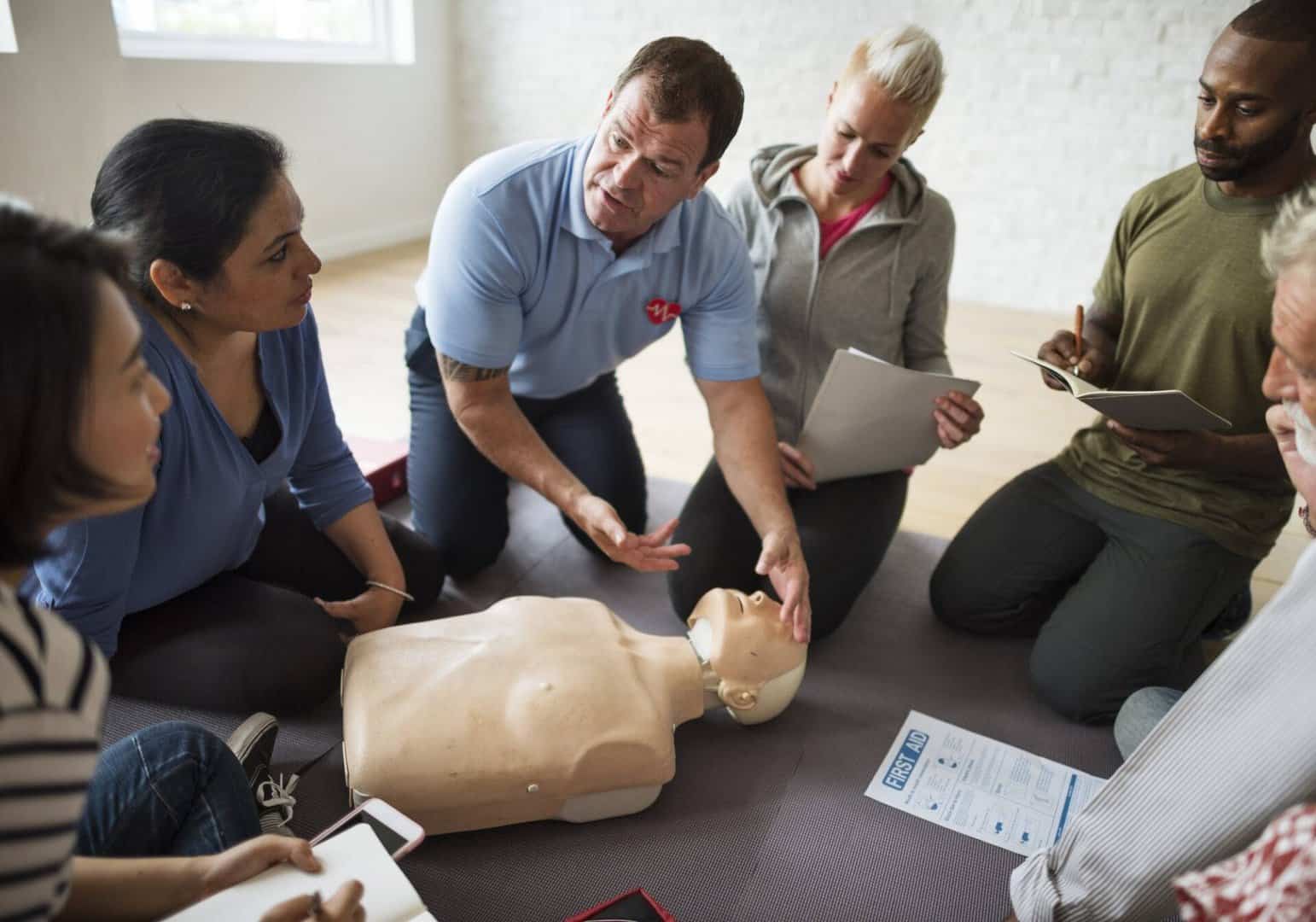
A simple sequence works well:
- Draft a proof plan that names the device, the assessment methods you will utilize, the prospects or simulations available, and exactly how you will certainly fulfill the concepts and rules. Create your tools and mapping, after that pilot them with one student or a peer if enabled. Record what you transform after the pilot. Run the assessment for your required variety of candidates. Keep participation, authorization where required, observation notes, and finished prospect work. Record your choices and, preferably, conduct a quick moderation with another assessor or your trainer. Save notes of any type of discrepancies and resolutions. Close the loop with a validation activity. Neat your tools based upon comments, and file the verified versions as final.
When each piece is labelled and dated, assessors relocate through your job without rubbing. That often translates to much faster turnaround and fewer queries.
Use the ideal language in your submissions
Your assessor reads loads of submissions. Crisp language aids them see your capability promptly. Make use of the terms used in the Standards and training packages where they fit: assessment problems, affordable adjustment, recognition, small amounts, evaluation tools, evaluation approaches, instruments, observation checklist, underpinning understanding, foundation skills. Stay clear of corporate jargon. If your workplace calls a tool kit chat a "huddle," that is fine in context, yet set it with the common term a minimum of when. It reveals you can run across settings.
Plan for RPL or credit history only if it truly helps
Some candidates with lengthy experience ask about recognition of prior understanding. RPL can accelerate completion, but it is still an evidence job. You need to reveal that your previous work fulfills the present system demands. If your proof is strong and recent, RPL for a couple of devices can be a great action. If your evidence is spread, building fresh devices inside the framework of the training course can be faster and show you the current standards more deeply. Have a truthful conversation with your RTO concerning this at the start.
Pace your theory and method together
It is appealing to binge the concept analyses then develop devices, or do the reverse. The far better path is to weave them. Review a section on assessment methods, then immediately draft a tiny instrument, like a five inquiry knowledge check. After a shipment webinar, run a micro session for a colleague. Immediate application cements knowing. It likewise loads your proof financial institution without drama.
Anticipate usual stumbling blocks
Several discomfort points repeat across cohorts.
- Mapping that shows protection but not depth. Solve by adding clear efficiency requirements in your observation list, not just a tick for "task done." Candidate directions that transform the expertise by crash. Resolve by inspecting your directions versus the assessment conditions and removing out any additional hurdles. Missing credibility evidence. Resolve by adding short candidate affirmations, assessor notes on observation, and, where relevant, third party confirmations. Unclear decision guidelines. Address by composing simple, binary accept requirements and attaching exemplars where judgment is nuanced. Weak LLN factor to consider. Fix by adding a short LLN analysis area to every strategy and mentioning any kind of affordable changes clearly.
Naming these early helps you avoid avoidable rework.
Think beyond the certificate to the job
Completing a certificate iv tae is something. Functioning as a trainer and assessor is another. As you progress, collect small tales that show your thinking. Possibly you upgraded a task after 3 students misinterpreted an action. Possibly you found that a quiz asked about a policy that had actually been superseded and updated the thing bank. These minutes present expert judgment. They likewise become speaking factors in interviews when you move into a trainer role.
If your goal is to enter a formal placement, look for chances to co-train with an experienced associate before you end up. You will certainly see how the theory plays out, and you will certainly collect the type of existing instances employers value. A short stint co-facilitating onboarding or running a functional abilities check in your workplace can be the bridge from pupil to practitioner.
Keep your compliance directly, lightly
You do not need to be a compliance policeman to finish the TAE40122. You do gain from a light compliance mindset. Date your records. Version control your tools. Conserve sign in sheets and approval kinds. Note your small amounts and validation results. If your RTO asks you to reference Criteria stipulations, do so quickly and carry on. This discipline will make you faster and calmer in any type of RTO environment later.
Choosing the right service provider matters
All cert iv training and assessment programs must satisfy the very same national requirement, yet distribution designs differ. Some RTOs run structured cohorts with real-time sessions and solid mentoring. Others are self paced with very little assistance. Pick based on just how you find out. If you grow on due dates and group power, a mate helps. If you have a volatile schedule, self paced could be better, however confirm there is timely assessor accessibility. Ask about office or simulation alternatives, the number of live distribution opportunities provided, and just how they sustain recognition and small amounts tasks. A good fit can cut months off your journey.
Final words of practical advice
Treat the TAE40122 like the expert task it is. Develop tiny, keep relocating, and let evidence drive your style. You are not trying to thrill with concept. You are aiming to confirm that your tools and technique create reasonable, flexible, valid, and reputable judgments. Do that, and your certificate 4 in training and assessment will depend on solid ground, and you will stroll right into your next function all set to perform.
If you have already started the certificate iv in training and assessment and really feel stuck, select the smallest next point you can finish this week. Draft one observation checklist for an actual job in your work environment. Map it to one element and 2 performance criteria. Ask your assessor one exact inquiry concerning it. Momentum frequently complies with that single, concrete action.